The Search for a Vibrant Lifestyle
If you already own your land, you are way ahead of where we were when we started. What we didn’t know at the time was that our search would eventually lead us to an urban infill lot, a vacant parcel located within an already established downtown neighborhood in the Bay Area.
We currently live in a part of the California Bay Area that the grandkids flat-out call “boring.” Unfortunately, they’re right. While we have a nice park nearby with tennis courts, everything else requires a car. Without jumping in the vehicle, our entertainment centers around walking our dog.
When we decided to leave the suburbs, the biggest question was where we would resettle. We wanted to stay in the same general area but were looking for an upbeat, vibrant space – maybe near a downtown or a suburb with its own “urban village” feel.
The Million-Dollar Fixer-Upper Reality
Like most people, we started looking at homes on the MLS with the attitude that we would renovate. We spent at least two years searching for that ideal home, but the Bay Area real estate market was crazy.
Most homes within walking distance to a downtown were so old they were zoned historic. Renovating one of these meant upgrading everything to current building codes, which would be incredibly costly. On the flip side, homes already renovated were extremely pricey, and we’d still want to make modifications. Regardless of condition, these “urban” locations started in the millions.
The Lot Everyone Passed On
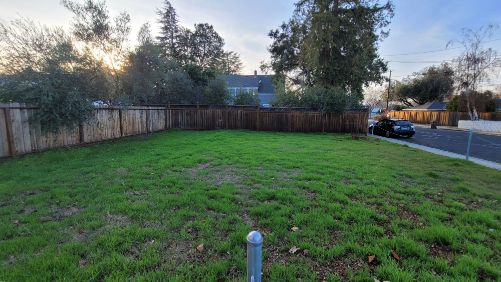
One day, for the heck of it, we changed our MLS search criteria to include land and commercial properties. (Who hasn’t seen those cool warehouse modifications online?) That’s when we found the small urban infill lot near downtown that had been sitting on the market for a few years.
This was a classic case of an urban infill lot with a twist. The neighbor originally had an irregular shaped piece of land – an L-shaped lot where they split the foot portion off to sell. It sat on the market because the owners refused to obtain a Certificate of Compliance to have it recognized as a legal lot. Any buyer would have to pay the fees and submit the paperwork themselves – with absolutely no guarantee the land would actually qualify as a buildable parcel.
The Best News: “Planned Development” and Site Feasibility
We visited the city Planning Department with our realtor to perform our due diligence and check the site feasibility. Our realtor’s career began in developing residential communities in the Bay Area, so we relied heavily on her resourcefulness.
The Planning Department told us the lot was zoned Planned Development, which gave us incredible flexibility. They actually recommended we consider adding a basement to maximize our 2,500-square-foot footprint. They provided the permit paperwork and fee schedules, and since this was an established area, we knew utilities like water, electricity, and gas were nearby.
The Check That Changed Everything
Based on our research, we decided to take the risk. We gambled that this tiny downtown infill lot would pass as a legal parcel. We submitted the paperwork along with a check for a processing fee that was close to our monthly mortgage—which is exactly why most other potential buyers passed on it.
Happily, the gamble paid off: the lot was granted its Certificate of Compliance.
What’s Next?
Finding the lot was just the beginning. Now that we officially own a piece of land near a vibrant downtown, the real work begins. In future posts, we will share the adventures of urban infill development, including:
- The Basement: A costly decision that came with its own set of headaches.
- The Infill Challenge: The extra costs and surprises of building in an established neighborhood.
- The Bureaucracy: Why you can’t always rely on a Planning Department to follow its own process.
Pro-Tip: If you are finding this story helpful, check out our previous post on modular home costs to see the hidden expenses we found beyond the base price!