This post shares our modular home builder experience in California – including the challenges we faced coordinating dealers, a factory, and a contractor on a tight infill lot.
When we began exploring modular construction in 2016, there were very few modular builders operating in California. If you wanted to build modular – especially a full home and not just an ADU – your options were limited.
Over time, the “builder” role took several different forms: a factory representative, an associate launching a new factory, a local project manager, and ultimately a modular contractor.
The roles evolved. So did our understanding.
How We Approached Choosing a Modular Builder
We were not casual about this decision.
We attended the Kitchen & Bath Industry Show (KBIS) multiple times while it was held in Las Vegas. KBIS included modular exhibit areas where we could walk through model homes and speak directly with representatives. Hearing other buyers’ questions was often as valuable as asking our own.
KBIS also exposed us to innovations we hadn’t seen before, including an induction cooktop installed beneath the countertop for a completely seamless surface. We’re installing one in our own home and will share our experience once it’s in place. Even for homeowners who are simply replacing appliances or planning a renovation, KBIS is worth attending.
Our first modular factory tour was in Vallejo, California, where steel-framed homes were built flat in a controlled facility and unfolded at the job site. We attended seminars to better understand their process and business model. Ultimately, their standard designs were too large for our small lot, and they did not build semi-custom homes.
Working With a Factory Representative
We finally contracted with a Southern California company we understood to be a factory representative. They had experience constructing full homes — not just ADUs — which mattered to us.
Our project required full site development: excavation for a basement, new utilities, foundation work, and complete city coordination.
We paid a non-refundable feasibility study fee and signed a contract after they confirmed they could complete our project as a “full service” builder.
We had already designed our home and the builder submitted our drawings to the city – shortly after they returned them. A basement mini-kitchen in the basement raised concerns about potential rental use. We revised the drawings to include only a sink and refrigerator.
Ironically, later in a future resubmission we would face the opposite problem: not having a full kitchen.
Transitioning to a New Factory Vision
We had incorporated into our design the products that would make our home fully integrated, SMART, and energy-conscious. In 2016, the factory representative’s team had not yet incorporated this technology into their homes and was working hard to familiarize themselves with these systems and understand how to integrate them into a modular build.
During one meeting, the factory representative suggested introducing us to an associate.
The associate had recently completed a SMART modular home and was in the process of opening a California factory focused specifically on high-efficiency, net-zero-ready modular construction. The representative believed that a factory designed specifically around SMART and energy-forward builds aligned more closely with our long-term vision.
At the same time, it was becoming increasingly clear that working with the city was going to be complex. The associate’s partner was a contractor located within 30 miles of our property, which felt like an advantage.
The associate’s team was hosting informational seminars about the proposed factory, and we attended to better understand their approach before making a decision. The sessions outlined their design philosophy, technology integration, and long-term goals. It was clear, however, that launching a factory of that scale required significant capital, coordination, and timing.
After meeting with the associate’s partner face-to-face, we concluded that our vision and theirs were aligned. Given how slowly our planning approval was moving, the timeline for opening their factory also seemed to align with ours.
We moved forward – and paid for another feasibility study.
Planning Approval — Then COVID
We eventually secured planning approval.
Then COVID hit.
Once planning approval was granted, we had one year to obtain a building permit. During COVID, most city offices were closed or operating remotely. The building inspector began making courtesy calls to builders to let them know, even with COVID restrictions in place, approvals would still lapse and extension requests must be submitted.
However, with offices closed and communication disrupted, those calls did not lead to timely action.
Our previously approved plans ultimately expired.
When Factory Launch Delays Changed the Structure
Meanwhile, the associate continued launching his modular factory in California. COVID also affected their original one-year estimated completion timeline – essentially adding almost 2 years to their original projections.
Eventually, the factory determined it could not offer full-service management while launching a startup. The on-site portion was handed off to a local Project Manager with modular home builder experience about 20 minutes from our home.
At that point, we began to recognize patterns in how responsibilities were shifting.
The Impact of California SB-330
As offices reopened, the same previously approved plans were resubmitted. Around the same time, the city began implementing California SB-330, also known as the Housing Crisis Act of 2019, which was intended to streamline residential development approvals and increase housing supply.
Because we were building on a small lot, the city determined the lot was too small for a single-family home – however, if we modified the drawings to a multi-family, they would continue processing our plans.
We paid to have the basement redesigned so it could be classified as a Junior ADU – they have fewer code requirements than a full ADU.
The Project Manager secured the SB-330 eligibility. However, his team struggled with the new code requirements and eventually were looking to us to help with the research and provide them responses for the city. Their role was slowly evolving into the middleman.
Despite conducting that additional research ourselves, we were still billed for the research they started and the coordination time between us and the city. At one point, someone acknowledged that their small team was handling numerous projects and did not have the staffing to manage all the research required.
Taking Control and Hiring a Modular Contractor
The Project Manager did not have a dedicated construction crew and told us we were free to bring in our own contractors. At the time, that flexibility seemed like a cost-effective approach.
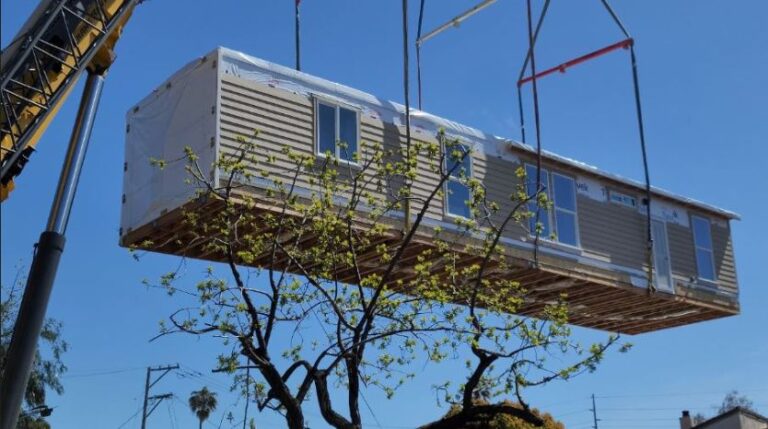
Soon after, our realtor introduced us to a modular contractor with hands-on experience in crane day and module setting. His field expertise stood out immediately. Since crane day is one of the most critical and expensive days of a modular build, we saw real value in having someone who specialized in that phase.
While we were planning to attend KBIS – where the Project Manager’s team would also be – an unexpected misunderstanding surfaced. The modular contractor we had been speaking with had previously subcontracted with the Project Manager, and our project came up in conversation. Somehow, when the modular contractor said he was working with us, the Project Manager assumed we were moving away from their team.
We had a brief phone call to clarify and expected to discuss it further in person. Instead, we received an email offering to release us from the contract. The message was professional and gracious. We were told that if anyone could manage their own project, it was us.
After careful thought, we accepted the release.
With the modular contractor’s support for the module set and site coordination – and relying on our own project management experience – we stepped fully into the role of managing the build ourselves.
Eventually, we received Planning approval and secured our building permit. It wasn’t quick or effortless, and working with the city brought its own challenges – lessons we’ll share in a future post.
What Our Modular Home Builder Experience Taught Us
Looking back, this was the turning point in our modular home builder experience.
As we changed builders, we quickly became aware that their expertise varied – from integrating SMART and energy-efficient features to navigating the city’s permitting process. Each transition revealed differences in depth of knowledge, responsiveness, and problem-solving approach.
More importantly, we learned we had to be our own advocate. When complications arose, our project sometimes became a lower priority. The additional coordination and research required to resolve unexpected issues slowed progress, and although we were told the matters were being addressed, we eventually realized we needed to step in to keep the project moving forward.
That realization shaped how we approached the remainder of our build – and it also led us to better understand the distinction between modular dealers and factories.
Frequently Asked Questions
How much involvement should a homeowner expect in a modular build?
Homeowner involvement can vary more than we expected. We initially assumed a full-service builder would manage most of the coordination and approvals, leaving us primarily focused on design decisions and selections. We found this was not always the case — especially around permitting, communication between parties, and tracking progress. Looking back, we realized that when someone said they were responsible for a portion of the project – like installation of on-site utilities – it didn’t always mean they were handling every related step from coordination to completion. Clarifying those boundaries early would have set more realistic expectations.
Is a modular home builder the same as a modular home dealer?
This is where things became confusing for us. Nearly everyone seemed to use the terms “modular home builder” and “factory representative” loosely. After several conversations, we developed our own practical definitions: if someone worked with multiple factories, we viewed them as a dealer; if they represented a single factory, we considered them a factory representative.
It took us time to finally realize that our initial contacts were not actually building the home. It was equally important to understand who was coordinating what – and how those roles overlapped.
What does “full service” really mean in modular construction?
One might assume “full service” means a single team manages the project from design through final inspection. While that may be possible in some cases, it can be challenging when the team is not local to the module delivery site.
When contracting with a “full service” company, it’s important not to assume you can step back entirely. In our case, greater clarity upfront would have helped manage expectations.
Why can responsibilities shift during a modular project?
Projects can evolve over time. We experienced progress slowing with the builder’s team, shifting city requirements, and subcontractors stepping away due to delays – all of which stalled momentum. When that happens, adjustments in responsibility may become necessary. Each transition required us to reset expectations and reestablish communication.